
Use this when the Statement of Account, the debtor aging and the ledger or balance sheet show different amounts, or a statement is empty. Work down the checks in order. Each step names the full guide to read next.
Before you start
- The debtor code, the month and the two figures you are comparing.
- Whether the person is a debtor (credit account) or only a POS member.
- The date range and ticks you used when you printed each report.
Steps
1. Are you looking in the right place?
The statement is at Debtor Ledger > Reports > Statement of Account. The aging is at Debtor Ledger > Report > Aging (or Debtor Reports > Debtor Aging (12 month)). A POS member is not a debtor, so for what a member bought use a POS report such as Sales By Outlet, or the Query screen. Full guide: Synergy Acc2026 – Statement of Account: Printing and Wrong Balances
2. The February statement shows March items, or a posted invoice is missing
Set the To date to the last day of the month you want, for example 28 Feb. Do not choose up to date for an old month, because it uses the current month. Then check that the invoice is posted and that its date falls inside the range. Full guide: Synergy Acc2026 – Statement of Account: Printing and Wrong Balances
3. The statement is empty, or the brought-forward amount looks wrong
Make sure all invoices and receipts are Posted, because unposted invoices can give an empty statement. Full guide: Synergy Acc2026 – Statement of Account: Printing and Wrong Balances
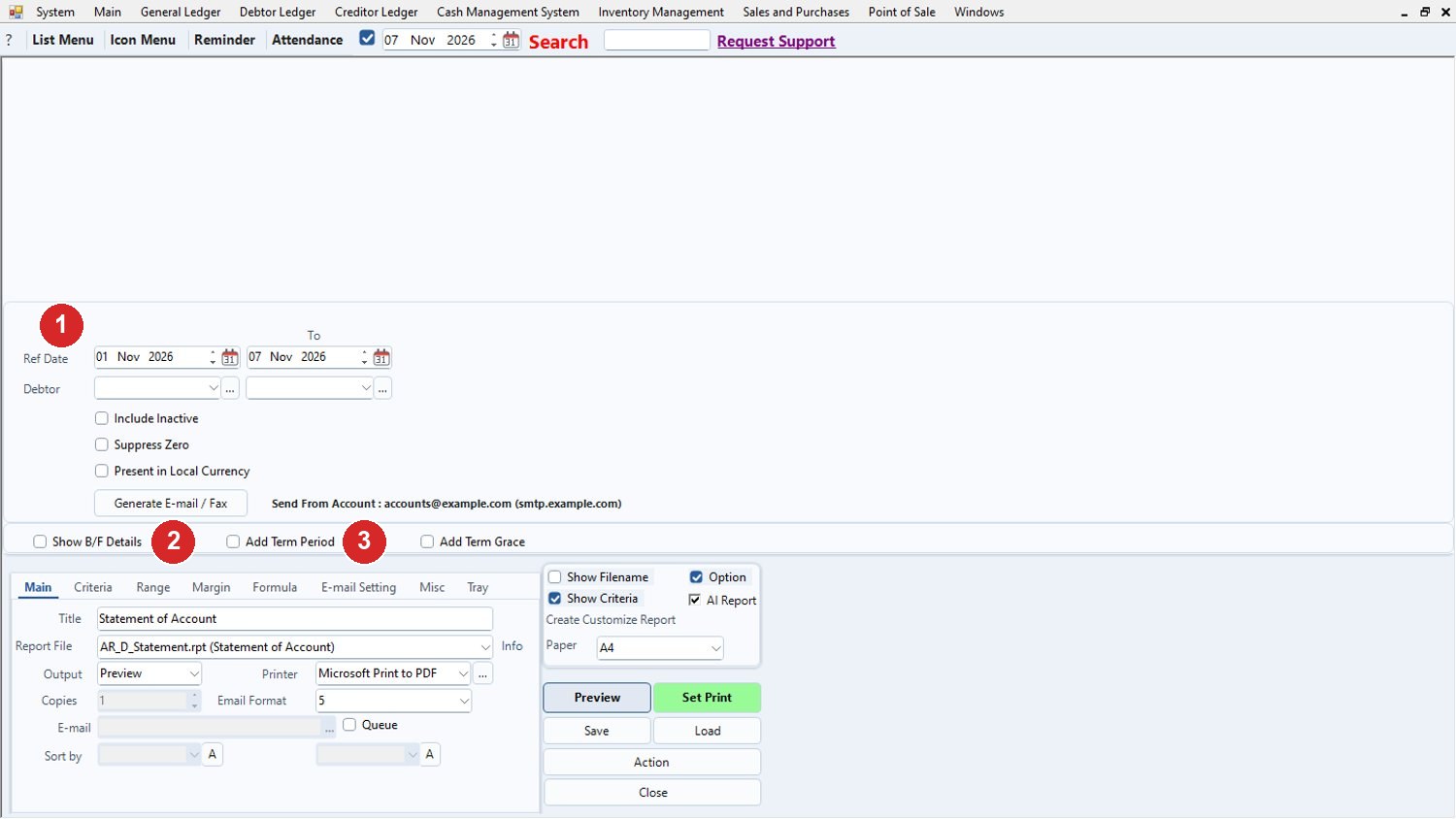
| Step | What to do |
|---|---|
| 1 | Start the date range from year 2000 and end it on the month end, so brought-forward (B/F) amounts are included. |
| 2 | Tick Show B/F details. |
| 3 | Untick Add Term Period if you do not need it. |
4. The statement shows paid bills and you want only outstanding ones
In the preview options, untick the option that shows paid bills. Statement of Account always shows the balance, so there is no version without it. You can preview the other statement formats to compare. Full guide: Synergy Acc2026 – Statement of Account: Printing and Wrong Balances
5. The owner paid, but the statement still shows an amount or a bracket
Check that the receipt or bank payment is really applied to the invoice. Without Apply (knock-off) the statement still shows the amount. Also check for payments that are on hold or not posted, because they change the balance. Run Apply Open Credit for any unapplied credit or receipt, close the statement, open it again and preview. Full guide: Synergy Acc2026 – What To Do When a Payment Does Not Knock Off an Invoice
6. Two statements for the same debtor show different balances
Print both with the same date range and the same ticks. Then check for unposted, on-hold or unapplied documents. In every case found, the cause was a filter, an unposted document, open credit or a late charge, not a damaged system. Full guide: Synergy Acc2026 – Statement of Account: Printing and Wrong Balances
7. The aging total differs from the statement or the balance sheet
The aging is based on invoices and knock-offs. If the aging is right, adjust the balance sheet by journal. If the balance sheet is right, check the invoices one by one. Full guide: Synergy Acc2026 – Debtor Aging and Credit Control
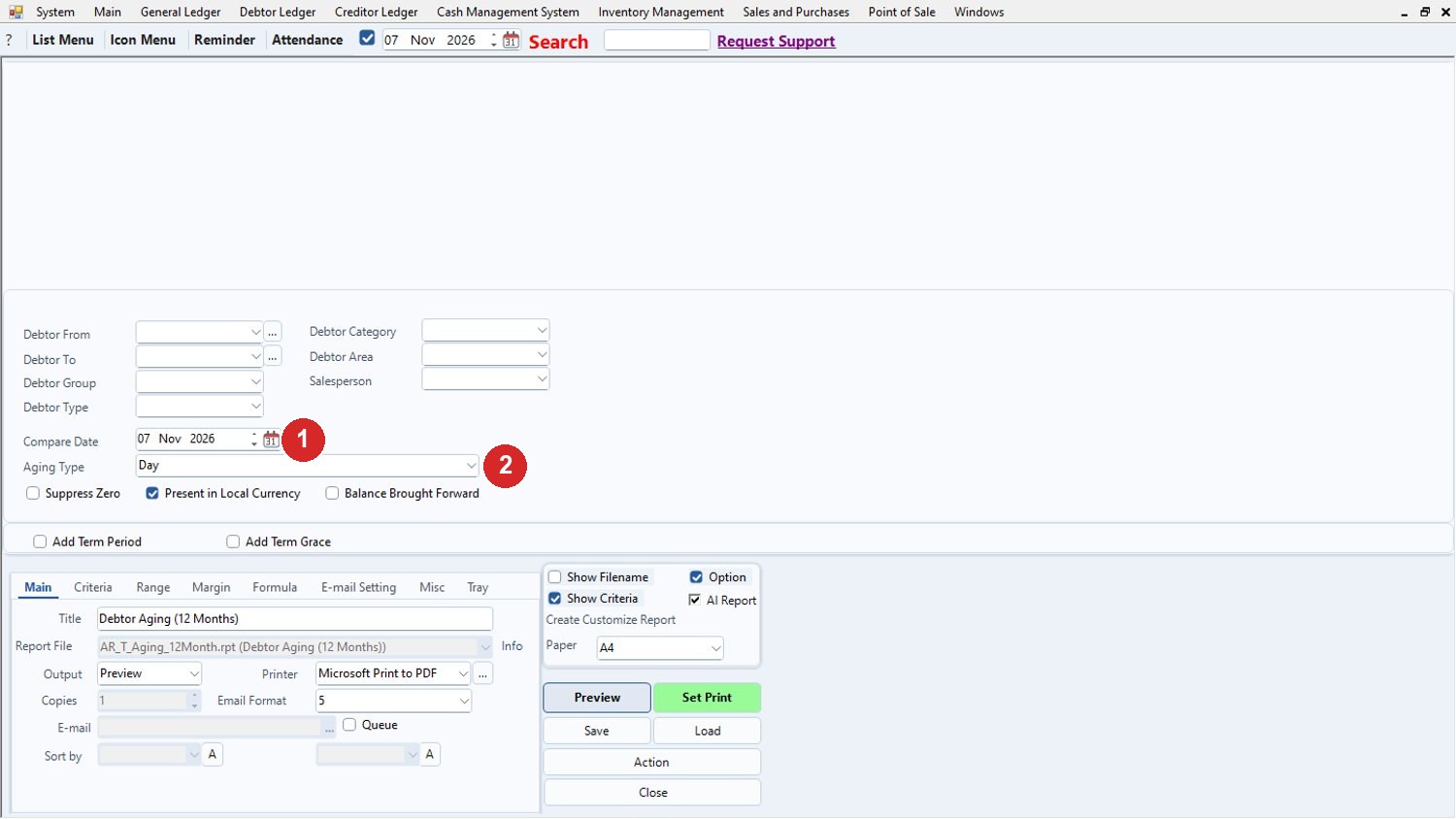
| Step | What to do |
|---|---|
| 1 | Set the Compare Date to the date you are checking, for example the end of a past month. |
| 2 | Use the same Aging Type (Day or Month) each time. |
8. The aging shows Open Credit
Open credit is usually an overpayment from a posted bank payment that has not been knocked off. It can also come from a credit journal or an advance receipt. Run the report over a longer date range to find where it started, and check the open-credit line before you apply it. Full guide: Synergy Acc2026 – Debtor Aging and Credit Control
9. A late charge appears twice
The late payment interest (LPI) calculation was run twice. Delete the duplicate LPI invoice. If it is already paid, delete or reverse its receipt first. Full guide: Synergy Acc2026 – Debtors: Charge Late Payment Interest and Reverse It
10. The ledger or GL still does not match the report
Take sample documents and compare them one by one with the report. In the GL, look for entries to a creditor account without a specific creditor, such as an opening journal. Also check for a reference date earlier than the real entry date, and for creditors moved from Trade to Other. Full guide: Synergy Acc2026 – Debtor and Creditor Ledger Queries and Report Options
Tips
- The Statement of Account screen remembers your last dates, Suppress Zero, Include Inactive and debtor range, so check them each time.
- For an audit, use Debtor Aging (12 month) and set the Compare Date to the last date of the accounting year.
- If amounts in a foreign currency look different, check the Present in Local Currency tick on both reports so they use the same setting.
Common problems
A debtor is missing from the statement list.
Check Include Inactive, Suppress Zero, the debtor range and any agent filter.
The aging shows nothing after you pick a debtor.
In Debtor Ledger > Query > Debtor Ageing, click Refresh to load the figures.
The day columns are greyed out.
The Aging Type is not Day. Change it to Day to enter day columns.
The figures still do not match after these checks.
Contact Synergy support. Have ready the debtor code, the month, a screenshot of the preview options, and the two figures you are comparing.